
When Grief Doesn’t Have a Place: Understanding Disenfranchised Grief
There are losses you can name out loud. And there are losses you carry quietly, because there isn’t a clear place for them to land. No role to point to. No title that makes it make sense. No obvious invitation into the circle of people who are allowed to grieve publicly.
Last week, I learned that someone I knew died.
And even as I write that sentence, you can feel the vagueness in it. Someone I knew. Not a category people immediately understand. Not a role that signals how I’m “supposed” to feel.
He wasn’t part of my current, day-to-day life. We hadn’t been in touch in a while. The relationship had shifted, as they do. But there was a time when he was a consistent presence. There was trust. There was ease. There were conversations that only make sense in the context of a specific version of your life.
And now he’s gone.
I found out quietly. Not through a call. Not because I’m in the inner circle. Just… information that left me without a clear place to land.
There isn’t a seat for me in the immediate grief. I’m not part of the logistics. I’m not someone people are checking in on. I’m not expected to show up anywhere.
And at the same time, I’m not unaffected.
That tension is what we don’t talk about enough. It’s called Disenfranchised Grief
What Disenfranchised Grief Actually Is
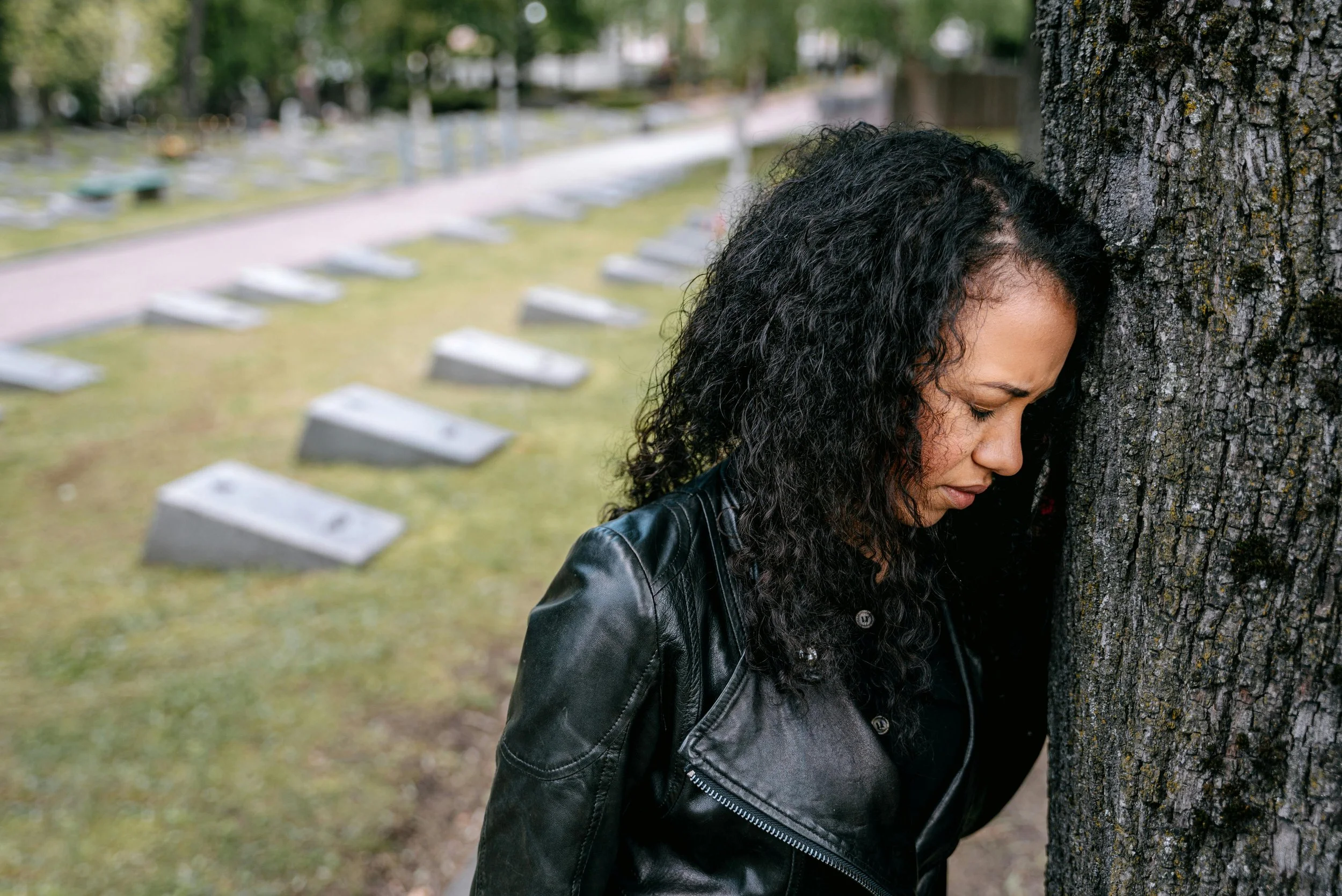
It refers to grief that isn’t openly acknowledged, socially validated, or fully supported. Not because it isn’t real, but because it doesn’t fit the categories people recognize.
We’re very comfortable with certain types of loss. Immediate family. Spouses. Close, visible friendships. Those relationships come with built-in responses. People know what to say, or at least they know they should say something.
But a lot of relationships don’t exist in those clean lines.
Sometimes the connection was real, but private.
Sometimes it belonged to a different chapter of your life.
Sometimes it was complicated, undefined, or no longer active.
Sometimes the details matter, but they’re not yours to share.
And when loss happens in that space, you’re left holding something that makes sense internally, but not externally.
The Part That Feels Off
The Part That Feels Off
Disenfranchised grief doesn’t always show up as dramatic or overwhelming.
It shows up as disorientation.
You find yourself asking questions you don’t usually have to ask:
Do I say something?
Do I keep this to myself?
Is this “mine” to grieve?
Why does this feel heavier than I expected?
There’s no script for it, so you end up writing your own in real time.
And because there’s no clear social response, the grief often gets minimized, not by others, but by you.
You scale it down. You rationalize it. You compare it to “closer” losses. You tell yourself it shouldn’t feel this significant.
But significance isn’t determined by how easily a relationship can be explained.
It’s determined by whether it mattered.
Why This Happens
We’ve been taught, culturally, to measure grief by proximity and visibility.
How close were you?
How often did you talk?
Were you part of their current life?
Those questions make sense from the outside. They don’t hold up particularly well from the inside.
The brain doesn’t organize attachment according to social categories. It responds to familiarity, to trust, to shared experience.
It responds to what felt meaningful, even if that meaning existed in a specific time or context that no longer looks the same.
So when that person is gone, the response isn’t calculated. It’s felt.
Disenfranchised grief happens when that internal reality doesn’t match the external narrative.
There’s another layer to this that makes it even harder.
Sometimes you could explain the significance of the relationship, but doing so would require sharing details that aren’t yours to share. So you don’t.
You protect the privacy. You respect the boundaries. You keep the context to yourself.
But without that context, your grief becomes harder to translate.
So instead of explaining it poorly, you just… don’t explain it at all.
And now you’re carrying something real, without language that feels usable in public.
Where This Shows Up (Including Work)
This is where disenfranchised grief becomes especially visible because work is structured around clarity, roles, and performance. You show up. You log in. You’re expected to function.

There’s no category for what just happened.
You’re not eligible for bereavement leave.
There’s no box to check that says “complicated personal loss.”
There’s no natural opening to explain something you can’t fully explain.
So you make a series of small decisions:
You keep your camera off.
You respond a little slower.
You reread the same email three times because your focus isn’t landing.
You choose not to bring it up because you don’t want to answer follow-up questions you can’t or won’t answer.
From the outside, it looks like distraction. Maybe fatigue. Maybe a slight dip in engagement, but from the inside, it’s the cognitive load of carrying something that hasn’t been acknowledged anywhere.
This is one of the blind spots in most workplaces.
Support is often structured around clearly defined events. Immediate family loss. Documented situations. Things that can be named cleanly. But a significant amount of grief doesn’t present that way. Which means employees are often navigating real loss while still being expected to perform at full capacity, without explanation and without adjustment.
What To Do With It
There isn’t a clean system for this, which means you have to create something functional for yourself.
Not perfect. Just functional.
Start by removing the need to justify the grief.
You don’t need a title for the relationship to legitimize your response. You don’t need to explain the timeline, the complexity, or the distance. If the connection mattered, the loss is real. That’s enough.
From there, it becomes a question of where this gets processed, not whether it’s “valid.”
That might mean identifying one person who can hold context without needing a full explanation. Someone who doesn’t require you to translate the relationship into something more acceptable.
It might mean deciding what level of acknowledgment feels right at work, if any.
For some people, that’s saying nothing and adjusting expectations internally.
For others, it’s a simple, non-detailed statement: “I had a loss last week. I may be a little off.” No elaboration required. You’re allowed to set that boundary.
It also means adjusting how you measure your own functioning, at least temporarily.
You may not have the same level of focus. Decision-making might feel slower. Your tolerance for small stressors might be lower than usual. That’s not a character issue. It’s bandwidth.
So instead of pushing for your usual baseline, you aim for what’s workable. What gets done without adding unnecessary friction.
This isn’t about stepping out of responsibility. It’s about recognizing that you’re operating with a different internal load and adjusting accordingly.
Finally, give the grief somewhere to exist that isn’t entirely internal.
Not everything needs to be shared publicly. But if it has nowhere to go, it tends to show up sideways. In your focus, your energy, your reactions.
Write it down.
Talk it through with someone who gets it.
Name it, even if only privately.
The goal isn’t to make it visible to everyone.
The goal is to keep it from becoming invisible to you.
What This Requires
What makes disenfranchised grief difficult isn’t the grief itself. It’s the lack of structure around it.
No role. No script. No clear place to put it.
So it gets carried alongside everything else…your work, your responsibilities, your day-to-day functioning, without acknowledgment and without adjustment.
That’s the gap. Not that the grief exists. That it exists without recognition.
Disenfranchised grief isn’t rare. It’s just quiet.
It doesn’t come with casseroles or calendar holds. It doesn’t trigger policies or public acknowledgment. It shows up in the middle of your regular life and asks you to keep going without a clear place to put what just happened.
Which is why so many people end up questioning their own response. But the issue isn’t the response.
It’s that we’ve built systems (social and professional) that only recognize a narrow version of loss. Everything outside of that gets managed privately. Not because it’s smaller. Because it doesn’t fit.
Once you can see that clearly, you can start to respond differently.
You can stop minimizing it just because it doesn’t translate.
You can decide what level of acknowledgment you need, even if it’s not public.
You can make small adjustments to how you move through your day instead of holding yourself to a baseline that no longer fits.
And if you’re in a position to influence other people, at work, in leadership, in community, you can widen the lens.
You don’t need every detail to recognize that something real might be happening.
You don’t need a perfect category to allow for flexibility.