
Men's Grief: The Losses We Don't Give Men Permission to Talk About
Reflection on Grief, Strength, and the Stories We Tell Men
If grief had a stereotype, it would probably look emotional.
It would look like tears. Conversations. Vulnerability. A visible expression of pain. For generations, that image has shaped how many people understand loss. It has also shaped who we believe is grieving "correctly." The problem is that grief does not follow stereotypes. Neither do grieving people.

Every year, countless men navigate profound loss while receiving messages that are often contradictory. They are told to be strong, but not distant. To open up, but not too much. To keep going, but somehow also make time to process. Many find themselves caught between cultural expectations that leave little room for the reality of their experience.
As a result, men are often misunderstood in grief. Not because they do not grieve deeply, but because grief frequently shows up differently than people expect.
Father's Day offers an opportunity to talk about that reality.
Not just for fathers, but for sons, brothers, husbands, partners, grandfathers, friends, and colleagues. For the men grieving a parent. The men grieving a child. The men supporting everyone else while carrying their own heartbreak. The men who have spent years holding losses no one ever thought to ask about.
Because the truth is simple:
Men grieve.
The question is not whether they grieve.
The question is whether we recognize it when we see it.
The Myth That Men Don't Grieve
One of the most persistent myths surrounding grief is that men experience less of it than women. Research has repeatedly challenged this assumption.
Studies examining bereavement outcomes have found that men often report grief differently, express grief differently, and seek support differently. What has not been consistently demonstrated is that men care less, love less, or suffer less after a significant loss.
In fact, some research suggests that men may experience heightened vulnerability following the death of a spouse, including increased risks of depression, social isolation, physical health complications, and mortality. The difference is not necessarily the depth of grief. The difference is often how grief is expressed.
For many men, grief is less likely to emerge through conversation and more likely to emerge through action. Less likely to appear as visible sadness and more likely to show up through behavior, physical symptoms, irritability, work, or withdrawal.
This distinction matters because people often recognize grief only when it resembles their own experience.
When a grieving person cries openly, support tends to arrive quickly. When a grieving person works longer hours, becomes increasingly quiet, throws themselves into projects, develops sleep problems, or grows short-tempered, grief is often overlooked entirely.
The result is a dangerous misunderstanding.
Many grieving men are not unsupported because they are hiding their grief. They are unsupported because others fail to recognize it.
How Grief Often Shows Up in Men
There is no single "male grief response." Human beings are far too complex for that. However, researchers and grief professionals have observed common patterns that frequently emerge among men navigating loss. One of the most visible is increased focus on work and productivity. Work offers structure. It offers measurable outcomes. It offers temporary relief from uncertainty. When life feels chaotic, tasks provide something concrete to solve.
For some men, returning to work quickly is not avoidance. It is regulation.
Others become highly focused on problem-solving. They organize paperwork, manage logistics, repair things, research endlessly, or immerse themselves in responsibilities. These actions can serve an important purpose. They create a sense of agency during a period defined by powerlessness.
Irritability is another frequently misunderstood grief response.
Many people expect grief to look like sadness. In reality, grief often travels with frustration, impatience, agitation, and anger. This is especially true when someone feels overwhelmed, helpless, exhausted, or unable to fix what has happened.
Withdrawal is also common.
Some men become quieter. They reduce social contact. They spend more time alone. This is often interpreted as emotional distance when it may actually reflect emotional overload.
Physical symptoms frequently accompany grief as well.
Men may report:
Changes in sleep
Headaches
Digestive issues
Muscle tension
Fatigue
Increased blood pressure
Appetite changes
Because these symptoms are physical, they are often treated as separate issues rather than recognized as part of the grieving process.
Some individuals also experience increased risk-taking or substance use. This can include excessive work, overtraining, reckless behavior, alcohol misuse, or other attempts to manage emotional discomfort through activity or avoidance. These responses are not unique to men. They are human responses.
However, they are often more socially acceptable expressions of grief for men than vulnerability itself.
The Neuroscience of Male Grief
When discussing men's grief, it is important to distinguish between biology and socialization.
The reality is that both play a role.
From a neurological perspective, grief activates attachment systems within the brain regardless of gender. When someone significant dies, the brain must adapt to the absence of a person who was deeply integrated into its understanding of safety, routine, identity, and connection.
This process affects attention, memory, emotional regulation, sleep, and stress response systems. The human brain does not have a "male grief center" and a "female grief center." What often differs is how people have been taught to respond to emotional experiences.
Many boys receive messages from an early age that emotions should be controlled, managed, minimized, or solved. Vulnerability may be associated with weakness. Dependence may be discouraged. Emotional expression may be rewarded only when it remains contained.
Over time, these lessons shape behavior. By adulthood, many men have developed extraordinary skill in functioning while distressed. Unfortunately, functioning and healing are not the same thing. The ability to keep moving does not eliminate grief. It simply changes where grief lives.
This is why many men report feeling most emotional when engaged in activities rather than conversations. Driving, fishing, exercising, building, walking, fixing, or working often create conditions where emotion becomes more accessible. The nervous system frequently processes experiences through movement and engagement, not just language.
Understanding this distinction helps us stop measuring grief by how much someone talks about it.
Father's Day and the Invisible Weight Men Carry
Father's Day can be joyful. It can also be complicated.
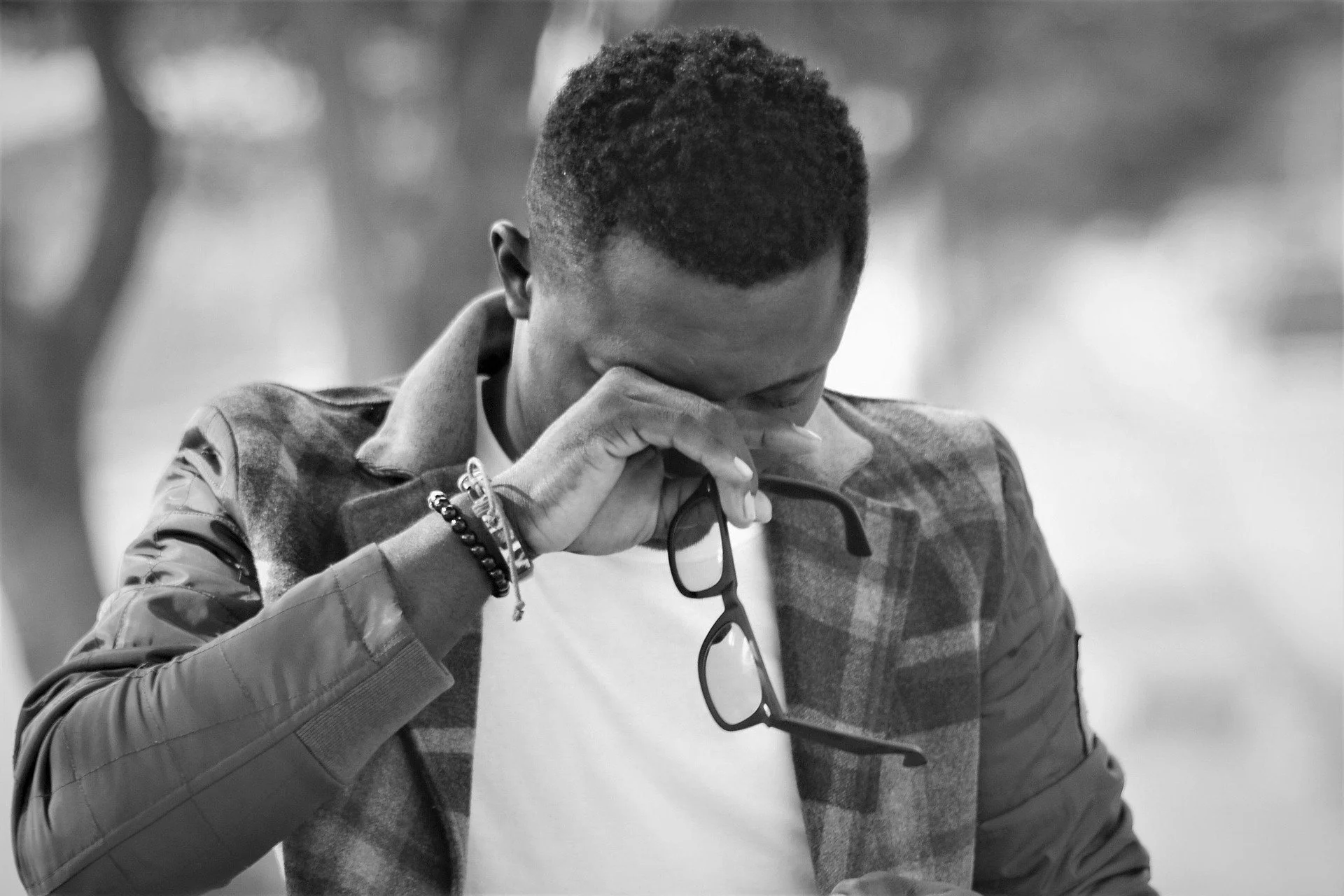
For some men, Father's Day is a reminder of a father they loved deeply and miss intensely.
For others, it highlights a complicated relationship, an estrangement, or a wound that never fully healed.
Some men spend Father's Day grieving a child.
This loss often remains profoundly misunderstood. Parents are expected to carry on. Fathers are often expected to support partners, siblings, and extended family while receiving little support themselves.
Others spend Father's Day carrying the invisible labor of holding a grieving family together.
When a death occurs, men frequently assume logistical responsibilities. They make phone calls, handle finances, coordinate services, manage household needs, and support others. These responsibilities are necessary, but they can also delay recognition of their own grief.
Eventually, however, grief tends to demand attention. Not because someone failed to cope. Because grief is the natural consequence of loving someone who mattered. Father's Day often becomes a collision point where those realities become impossible to ignore.
What Support Actually Looks Like
One of the most common mistakes people make is assuming that support requires emotional excavation.
It does not. Many grieving men do not need to be pushed into conversations they are not ready to have.
What they need is permission.
Permission to talk.
Permission not to talk.
Permission to revisit the conversation later.
Permission to grieve in ways that do not fit expectations.
Support often looks less like intervention and more like availability. Checking in consistently matters more than forcing disclosure. Inviting connection matters more than demanding vulnerability. Shared activities can be particularly valuable. A walk, a meal, a project, a drive, or time spent together often creates opportunities for connection without pressure. The goal is not to make someone process. The goal is to make sure they do not have to carry everything alone.
A Father's Day Reflection
If there is one message worth carrying into Father's Day, it is this:
Grief is not measured by how visible it is.
A man who cries openly is grieving.
A man who throws himself into work may also be grieving.
A man who grows quiet, becomes restless, fixes everything in sight, or struggles to sit still may also be grieving.
The question is not whether grief is present.
The question is whether we have learned to recognize it.
When we expand our understanding of grief, we create more room for men to be human.
And that benefits everyone.
Resources
Association for Death Education and Counseling (ADEC)
https://www.adec.org
Hospice Foundation of America
https://hospicefoundation.org
National Alliance for Children's Grief
https://childrengrieve.org
The Dinner Party
https://www.thedinnerparty.org
988 Suicide & Crisis Lifeline
https://988lifeline.org
If grief is significantly impacting daily functioning, relationships, health, or safety, seeking professional support can be an important step. Grief is a normal response to loss, but no one is meant to carry it entirely alone.